


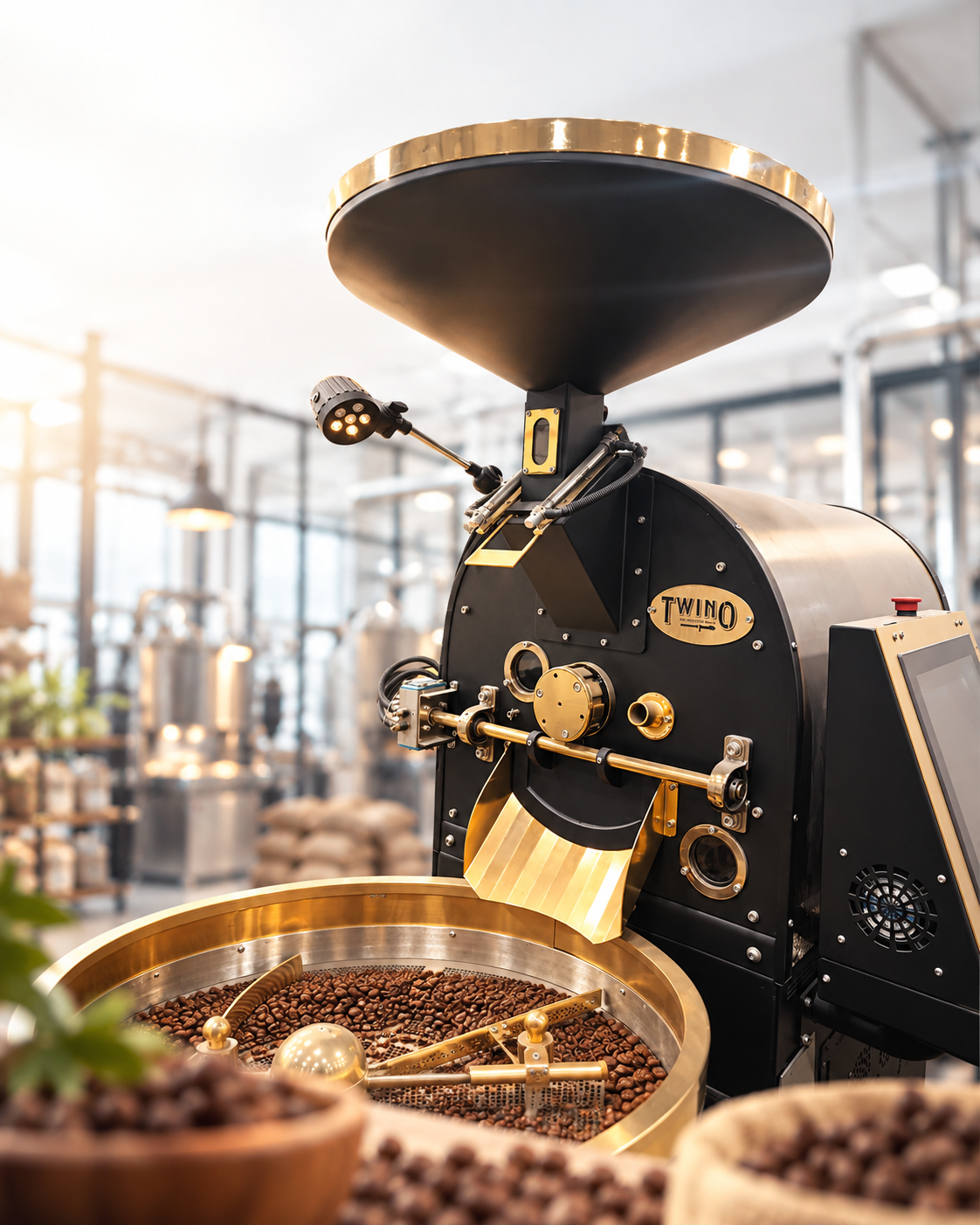
Efficient coffee production depends on matching roasting capacity with repeatable process control and an organised workflow. A larger machine can increase batch size, but sustainable output also depends on loading, roasting time, cooling, product transfer, and the work required between batches.
For coffee businesses, the objective is to produce the required volume while maintaining the flavour, aroma, and consistency their customers expect.
Özstar Makina manufactures coffee roasting machinery as part of its food processing equipment portfolio. Its coffee roasting brand, TWINO Roastery Tech, offers equipment for different scales of professional coffee production, alongside supporting roastery machinery.
Planning a new production line?
Our engineering team helps you choose the right machinery for your product and capacity.
Batch Capacity and Hourly Output Are Different
A coffee roaster’s batch capacity describes the quantity it can process in one batch. Hourly output depends on how many production cycles the operation can complete and the amount of roasted coffee each cycle produces.
When choosing a commercial coffee roasting machine, manufacturers should consider:
- The working batch size for their coffee and roast profile.
- Roasting time and the interval between batches.
- Loading, discharge, and cooling arrangements.
- Weight loss during roasting.
- Warm-up, cleaning, and planned production stops.
This distinction matters when comparing equipment. A batch-size figure alone cannot establish how much saleable roasted coffee a business will produce during a shift.
Roast Controls Support Repeatable Production
Coffee roasting involves managing how heat is applied over time. Operators need useful information about the process and responsive controls to make informed adjustments.
Temperature readings, airflow settings, burner output, and drum speed can help operators understand and manage a roast, depending on the machine’s configuration.
At Ozstar makina, Twino coffee roasters are integrated with Artisan roast-profiling software, giving operators a visual record of how each roast develops. Artisan displays and records bean and environmental temperatures, plots roasting curves, and calculates the rate of rise (RoR) to help operators track temperature changes over time. Operators can mark key events, such as first crack and the end of the roast, save completed profiles, and compare subsequent batches against a reference curve. Depending on the machine’s configuration and supported connection, Artisan can also interface with machine controls, helping operators make adjustments and reproduce established roasting profiles.
Cooling Is Part of the Production Cycle
Cooling deserves attention when evaluating both quality and throughput. After discharge, roasted coffee needs an effective cooling stage before subsequent handling.
Our Twino coffee roasters feature integrated cooling units that use forced airflow and bean agitation to remove heat after discharge. This helps limit further roast development while promoting even cooling throughout the batch.
The cooling unit works alongside the roasting drum, allowing one batch to cool while the next batch is roasting. By considering cooling capacity together with batch size and roasting time, we design our machines to support a steady production rhythm and an efficient transition between batches.
Supporting Equipment Keeps Coffee Moving
An efficient roastery needs a clear route for coffee before and after roasting.
Depending on the operation, supporting equipment may include green coffee feeding systems, destoners, conveyors, storage silos, mixers, and grinders. Twino lists these equipment categories within its roastery offering.
Each serves a different purpose. A destoner, for example, helps separate stones and other heavier foreign material from coffee before grinding, reducing the risk of grinder damage.
The appropriate equipment sequence depends on whether the business supplies whole beans, ground coffee, blends, or several product formats. Planning these movements helps reduce unnecessary transfers and avoid congestion around the roaster.
Assess Energy Use Against Actual Production
Energy performance should be evaluated under realistic operating conditions.
Burner capacity and installed electrical power describe equipment specifications, but they do not directly establish energy consumption per kilogram of finished coffee. Batch utilisation, roast duration, warm-up time, idle periods, and the production schedule all influence the result.
When comparing industrial coffee roasters, request estimates based on a defined batch size and operating pattern. Comparisons are more useful when they use similar production assumptions.
Choose Equipment Around Your Production Plan
The right coffee roasting equipment should match the business’s current workload and intended growth.
Before selecting a machine, define the required daily output, number of coffee varieties, typical batch sizes, and available operating hours. Frequent changes between small batches create different requirements from long production runs of one product.
Installation planning should also address equipment dimensions, service access, utilities, extraction, and connections to supporting machinery.
These details help Özstar assess a suitable roaster and equipment arrangement for the customer’s operation.
Efficient coffee roasting operations depend on appropriate equipment selection, production planning, and reliable machinery performance. Manufacturers must consider factors such as roasting capacity, product characteristics, and processing conditions when establishing their facilities.
Özstar approaches these requirements through engineering expertise and customer-oriented machinery development. By focusing on dependable equipment and continuous improvement, the company supports the evolving needs of the coffee processing industry.
Plan Your Coffee Roasting Operation with Özstar
Whether you are establishing a roastery or expanding an existing facility, start with a clear production target. Share your required output, typical batch sizes, coffee range, and available installation space with Özstar Makina to discuss coffee roasting equipment and supporting solutions suited to your business.