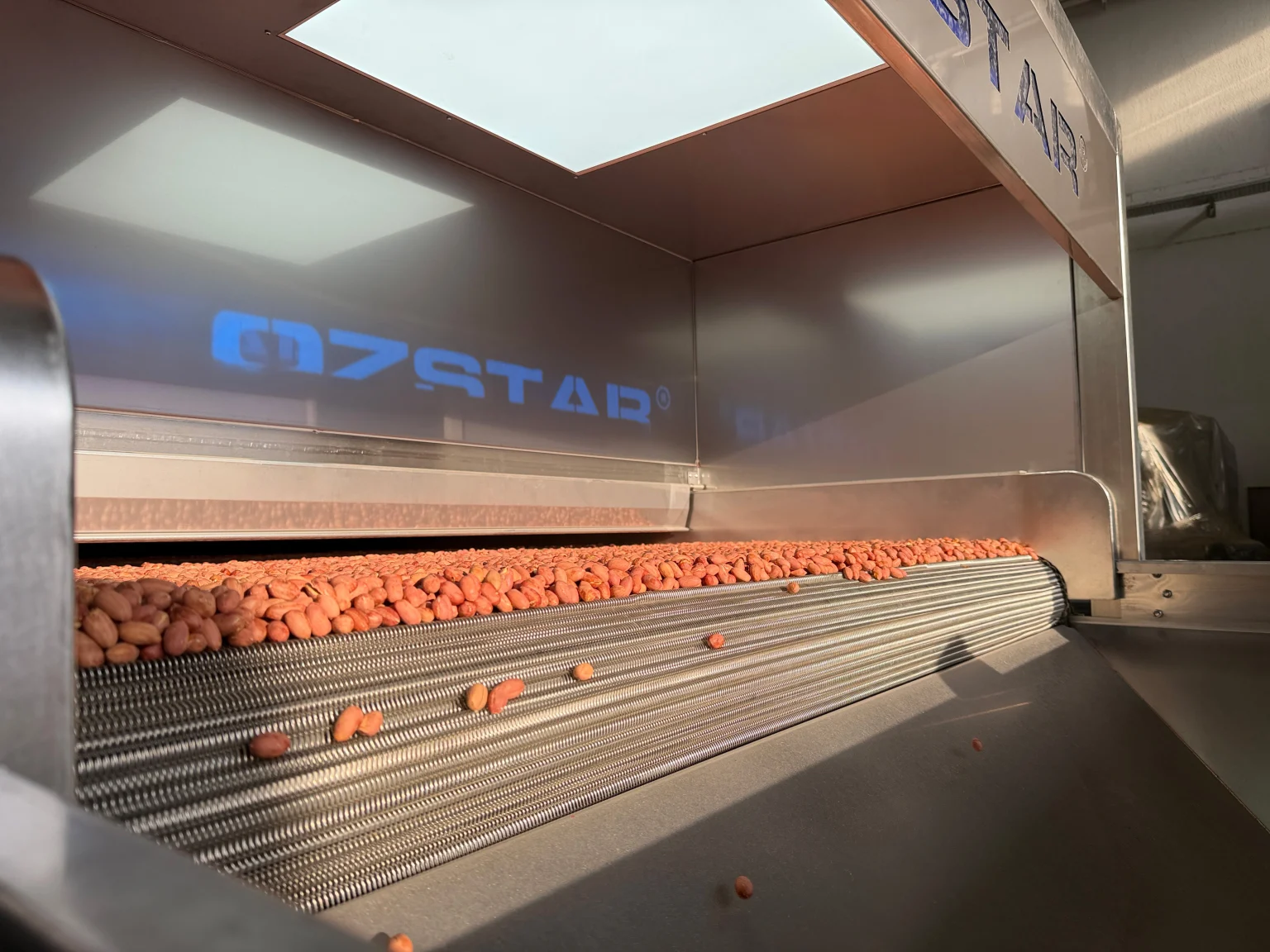


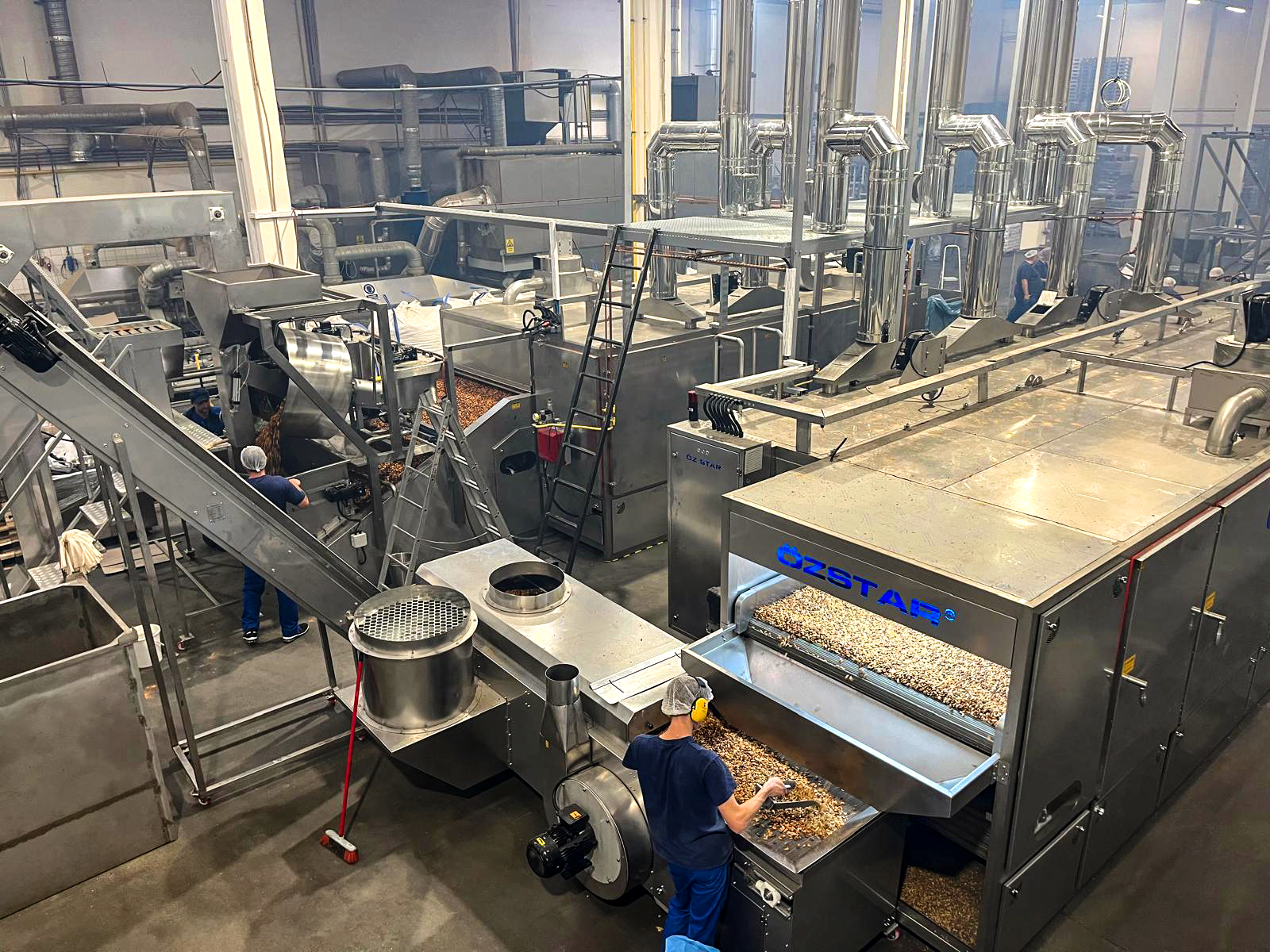
An integrated food processing line connects individual machines into a coordinated production system. Feeding, roasting or frying, cooling, seasoning, and conveying equipment are selected and arranged to move the product through the required stages at compatible rates.
For food manufacturers, this coordination can improve production flow, reduce manual transfers, and support more consistent processing conditions. Its effectiveness depends on how well the complete line matches the product, target output, and factory environment.
Why Connecting Processing Stages Matters
The performance of a production line depends on the relationship between its machines. A high-capacity roaster cannot deliver its full production potential if the cooling equipment or downstream conveyor cannot handle its output.
Planning a new production line?
Our engineering team helps you choose the right machinery for your product and capacity.
Capacity mismatches can create product accumulation, interruptions, or repeated manual handling. A well-planned system addresses these issues by considering processing times, transfer methods, and the working capacity of each stage together.
This is why integrated food processing lines require more than placing machines next to one another. They require a clear understanding of how the product behaves throughout the process.
The Main Benefits of Integrated Food Processing Lines
More Predictable Production Flow
Coordinated feeding and conveying help move product between stages at a manageable rate. This makes production easier to organise and helps reduce avoidable waiting between operations.
Line design must also account for different processing methods. Where a batch machine feeds a continuous process, for example, controlled discharge or a suitable buffer may be needed to maintain a steady supply.
Less Manual Handling Between Machines
Conveyors, elevators, and controlled transfer points can reduce the need to move product manually between operations.
The transfer system should suit the material being handled. Product size, fragility, coating condition, and temperature all influence the appropriate conveying method. Transfer heights and discharge arrangements also deserve attention, particularly when processing products that can break or lose their coating.
More Practical Use of Factory Space
A successful layout accommodates production equipment while providing access for operators, cleaning, inspection, and maintenance.
Available floor area alone does not determine whether a line will fit. Ceiling height, access doors, utility connections, extraction requirements, and product movement through the building also matter.
Considering these requirements early helps establish a layout that can function effectively during everyday production.
Automation and Future Expansion
Integration and automation are related, but they are different decisions. A line can combine manual, semi-automatic, and automatic operations according to the application.
The appropriate level of automation depends on production volume, recipe variation, operator responsibilities, and investment priorities. Control arrangements should make it clear how machines start, stop, and respond to interruptions elsewhere in the line.
Expansion also benefits from early planning. Increasing the capacity of one machine may require changes to feeding, cooling, conveying, or discharge equipment. Reviewing the whole process helps identify what a future upgrade will involve.
Customised Processing Lines from Özstar Makina
Özstar Makina’s equipment range covers roasting, drying, frying, salting, seasoning, coating, and conveying applications. The company also develops customised processing solutions, allowing equipment selection and configuration to be assessed around the customer’s production requirements.
One example is Özstar’s fully automated coated peanut processing line. This project brings together raw peanut feeding, coating preparation and application, frying, oil separation, cooling, seasoning, and final discharge. It demonstrates how several processing operations can form a coordinated snack manufacturing system.
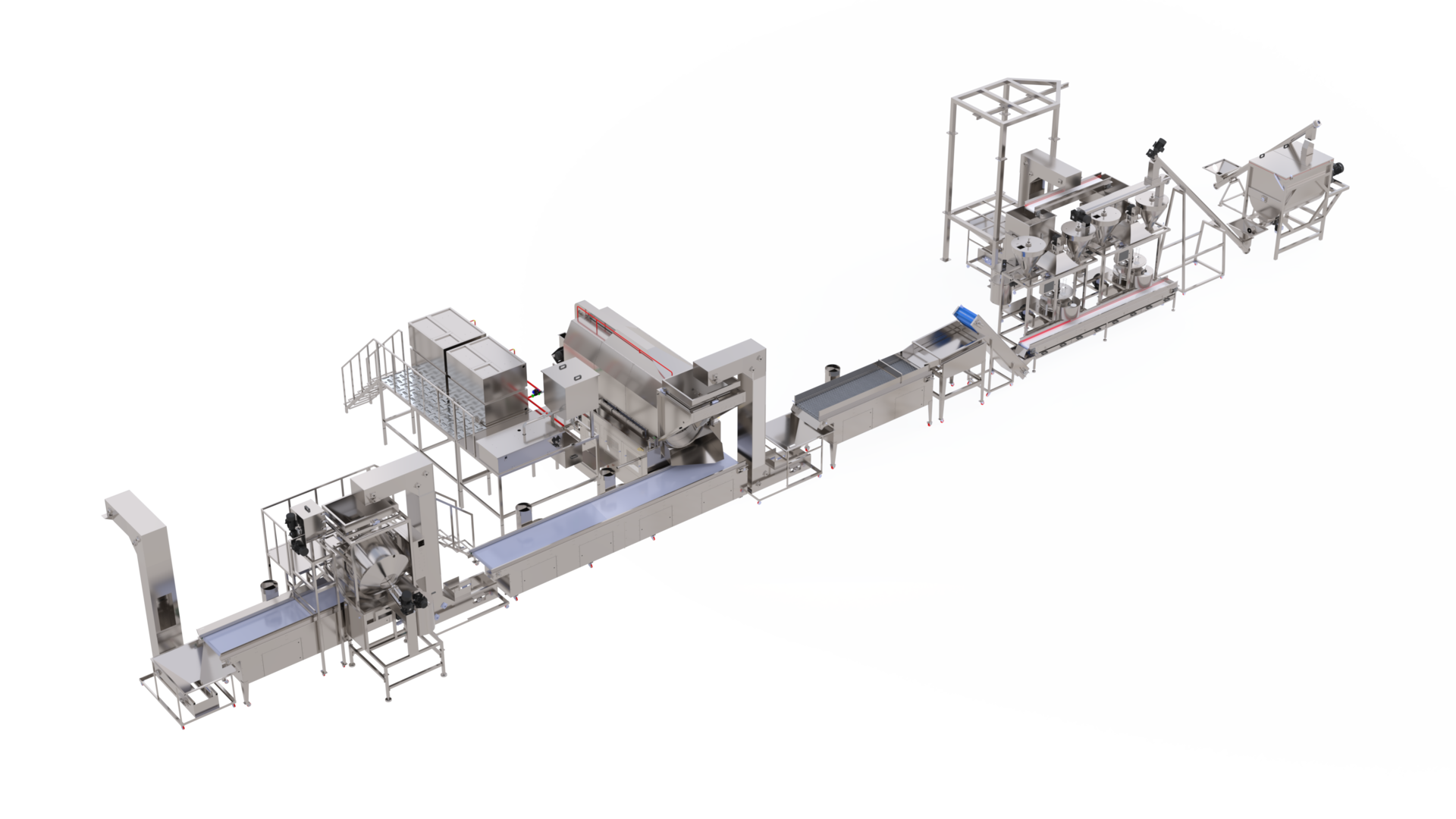
The appropriate arrangement varies with the product. A roasted nut line, a fried snack line, and a nut butter production line require different equipment sequences and handling methods. Customisation allows the project to address those differences from the planning stage.
What Should Manufacturers Define Before Choosing a Line?
A useful production brief should cover:
- Product characteristics: ingredients, dimensions, initial condition, and handling sensitivity.
- Finished-product requirements: desired colour, texture, coating, flavour, and discharge condition.
- Required output: target kilograms per hour, with a clear distinction between raw-material input and finished-product output.
- Production schedule: operating hours, product changes, and cleaning intervals.
- Installation conditions: available space, ceiling height, utilities, and extraction arrangements.
- Existing equipment: machines that must be retained and connected to the new system.
- Future plans: anticipated capacity increases or additional product varieties.
These details help establish whether the proposed equipment can meet the production objective as a complete system.
As food production facilities expand, the demand for coordinated and reliable machinery continues to grow. Integrated processing systems can help reduce unnecessary handling between production stages and improve operational organization.
Özstar combines machinery manufacturing expertise with practical engineering solutions to support efficient production environments. Its focus on complete processing solutions reflects the industry’s increasing need for flexible and dependable manufacturing systems.
Plan Your Processing Line with Özstar Makina
Whether you are establishing a new facility, expanding production, or adding a processing stage, the starting point is your product and production goal. Share your required capacity, process stages, existing equipment, and factory layout with Özstar Makina and discuss with our team a customised food processing line suited to your operation.